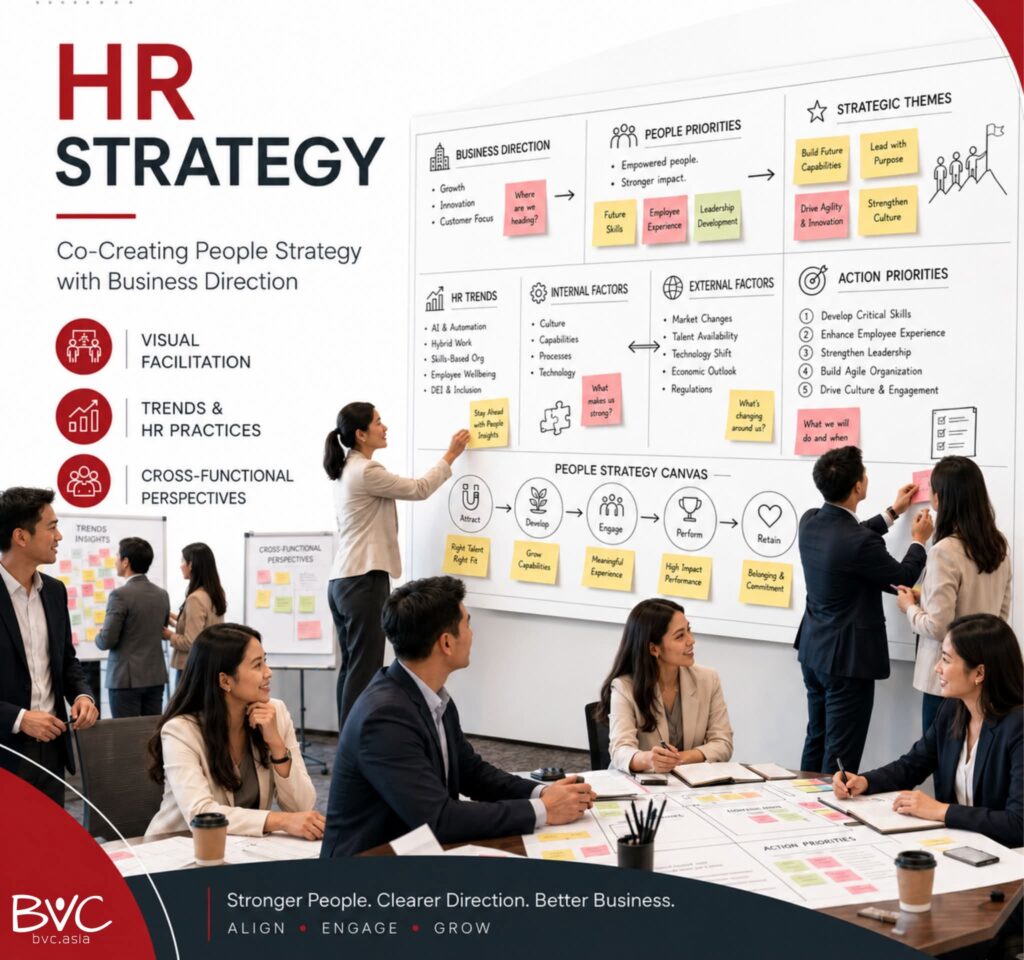
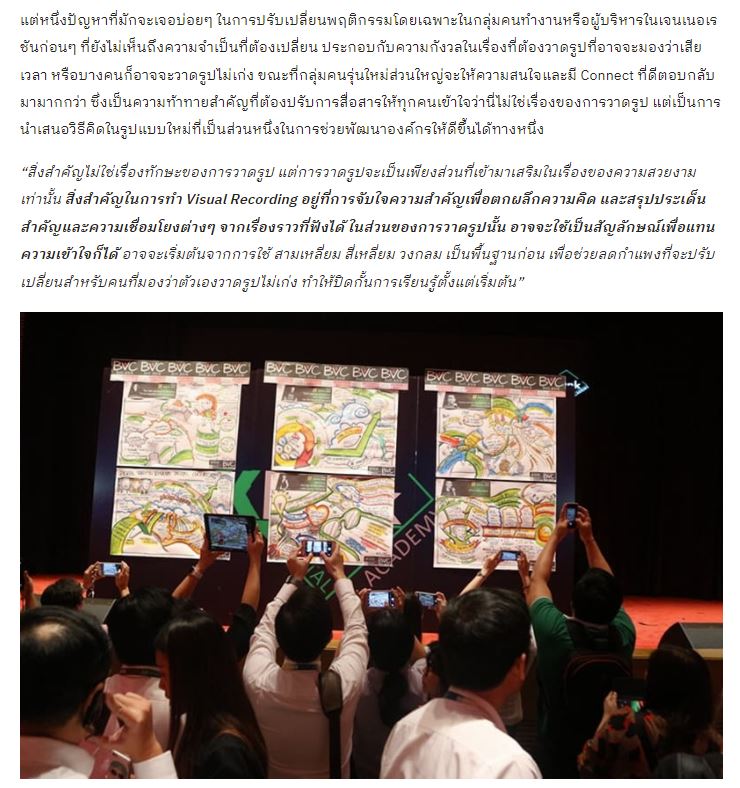
Facilitate กระบวนการคิดกลยุทธ์บุคลากรที่ดึง Business Units มาร่วม Co-Create ให้ตอบโจทย์องค์กรยุคใหม่และสร้างการเปลี่ยนแปลงได้จริง
From Business Direction to People Strategy: Building an HR Strategy That Does Not Start with HR Developing an effective HR Strategy should not begin with the question, “What new HR initiatives should we launch?” Nor should it begin by simply reviewing existing HR programs and deciding which ones need improvement. A stronger starting point is a more fundamental question:
As the business changes, what must the organization become — and how must its people evolve to make that future possible?
This shifts HR Strategy away from being a collection of HR activities and toward becoming a business-driven people strategy. The process begins with the future of the business, translates that future into implications for people and organization, identifies the gaps between today and tomorrow, and only then determines what HR must do. The strategy development process can be understood through eight connected stages.
1.Start with the Future of the Business, Not the Current HR Agenda
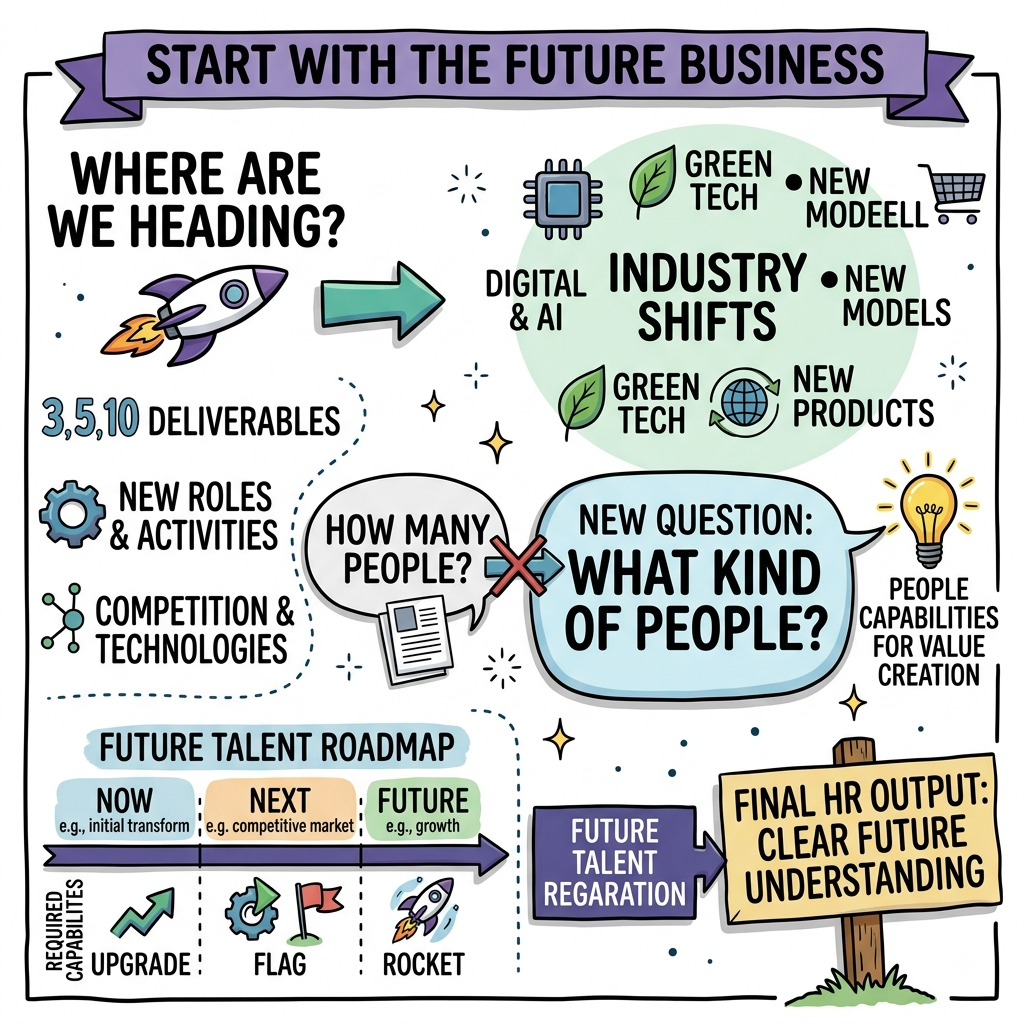
Before discussing skills, talent, leadership, culture, or HR systems, the organization must first clarify where the business is heading.
What will the organization be expected to deliver in the next three, five, or ten years? What new roles will it play? Which businesses may emerge? Which traditional activities may become less important? Where will competition become more intense? Which technologies will fundamentally change how value is created?
In a rapidly transforming industry, the future may involve new digital platforms, data and AI, green technologies, decentralized operations, new commercial models, direct customer relationships, new products and services, and entirely different competitive dynamics.
2.Scan the Future — Then Translate Trends into People Implications
External scanning often produces a long list of trends: AI, automation, climate change, energy transition, demographic shifts, changing customer expectations, geopolitical uncertainty, new regulations, sustainability requirements, and new business models. But identifying trends is not yet strategic thinking.
The more useful question is:
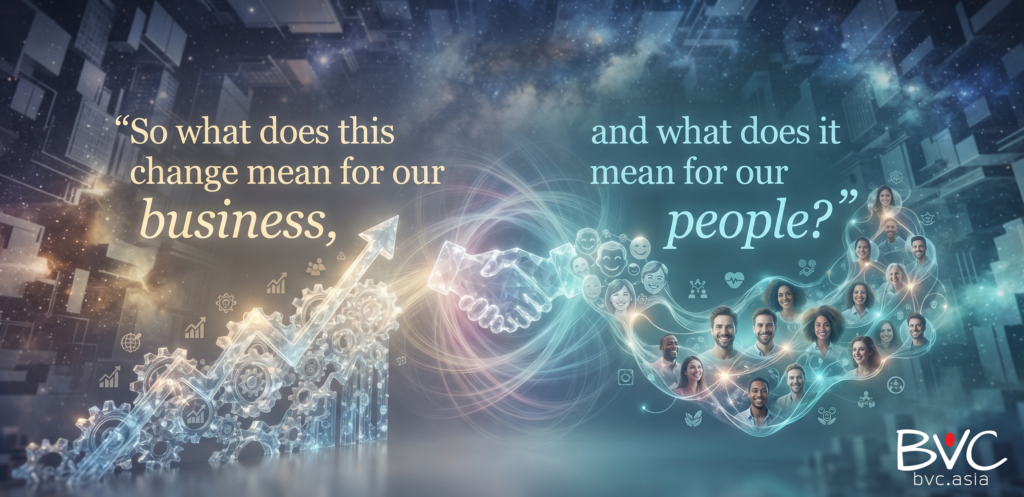
“So what does this change mean for our business, and what does it mean for our people?”
A technology trend, for example, should not automatically lead to an “AI training program.”
The organization should first ask: Which jobs will change? Which decisions will become data-driven? Which tasks will disappear or be automated? Which roles will require deeper expertise? How will customer expectations change? What capabilities will managers need to lead people working alongside technology?
Similarly, the transition toward greener business models should not lead only to environmental awareness campaigns.
It should provoke deeper questions: Which new technical capabilities will be required? Which existing skills could become obsolete? Which new commercial opportunities will emerge? Which employees must be reskilled? What behaviors and leadership practices will be required to make sustainability part of everyday decision-making?
A useful logic is therefore:
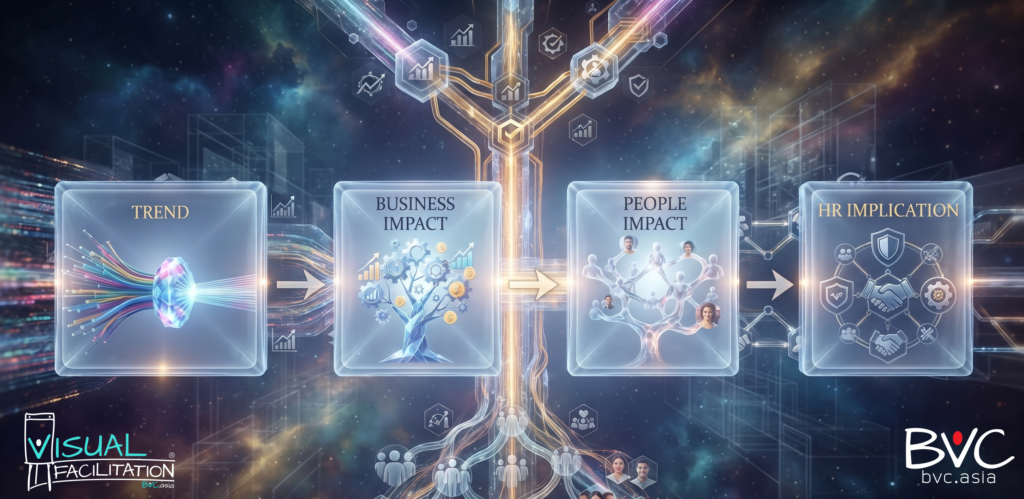
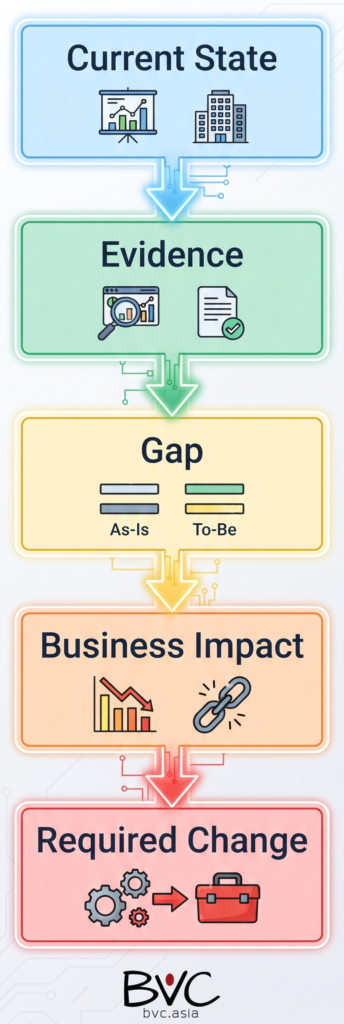
Trend → Business Impact → People Impact → HR Implication : This makes external scanning valuable not because it describes the future, but because it translates that future into workforce requirements.
3.Opportunity or Threat? It Depends on Organizational Readiness
One of the most important lessons in strategic analysis is that an external development is not inherently an opportunity or a threat.
The same change can be both.
A newly opened market may create major commercial opportunities. But if the organization lacks customer insight, commercial capability, pricing expertise, technology, decision speed, or entrepreneurial talent, the same development may become a serious competitive threat.
New technology may increase productivity. But if employees cannot adopt it, managers resist changing how work is done, or existing processes remain too rigid, that technology may increase the gap between the organization and its competitors.
This leads to a much more useful strategic question
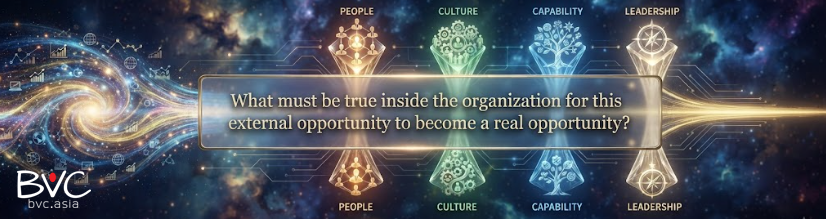
“What must be true inside the organization for this external opportunity to become a real opportunity?”
The purpose of SWOT analysis, therefore, should not be to fill four boxes.
It should reveal the organizational capabilities that determine whether the business can capture an opportunity or withstand a threat.
This is where business strategy begins to connect directly with people strategy.
4.Diagnose the Organization Against the Future — Not Against the Past
Once the future context is understood, the organization can turn inward.
Traditional internal analysis often asks whether systems already exist: Do we have a talent program? Do we have a competency framework? Do we have succession planning? Do we have leadership development? Do we have a performance management system?
A future-oriented diagnosis asks something more demanding:
“Are the systems we have today capable of producing the people and organization we will need tomorrow?”
An organization may already have a talent pool. But are those talents being prepared for future-critical roles? Are they being deployed to strategic assignments? Are they being used to solve real business challenges?
A performance management system may exist. But does it differentiate performance meaningfully? Does it create useful performance conversations? Does it inform development, career, talent, succession, and workforce decisions?
Learning programs may be extensive. But do they close critical skill gaps? Can employees apply what they have learned? Does the organization know whether capability has actually improved? The logic of internal diagnosis therefore becomes:
Frameworks such as McKinsey 7S can support this analysis across Strategy, Structure, Systems, Shared Values, Style, Staff, and Skills. But the framework itself is less important than the question behind it:
“How ready are we for the future we say we want?”
5.Turn Analysis into Strategic Issues That Matter to the Business
After external and internal analysis, the organization usually has too much information rather than too little.
The next challenge is synthesis.
Terms such as Talent, Leadership, Digital HR, Culture, Workforce Planning, or Employee Experience are not yet strategic issues. They are topics.
A true strategic issue should explain why the topic matters and what will happen if the organization does not address it.
For example, rather than saying:
“We need to improve talent management,”
the deeper strategic issue may be:
The organization is entering new businesses, but future-critical roles do not yet have sufficient internal talent pipelines, creating dependency on external hiring and increasing execution risk.
This framing changes the quality of the strategy immediately.
Strategic issues should therefore be tested against questions such as: Why does this matter to the future business? What business capability will be constrained if this remains unresolved? Is the root cause primarily workforce, capability, structure, leadership, culture, or system-related? How urgent is the issue? And is HR truly the owner, or is HR an enabler of a broader business issue?
The result should be a small number of meaningful strategic themes rather than a long catalogue of HR topics.
Typical themes may include workforce and organization, future capabilities, talent, leadership and change, culture, performance, digital/data/AI, employee experience, and future talent attraction.
6. Define the Future People Before Designing the HR Programs
A critical bridge is often missing between SWOT analysis and HR initiatives.
That bridge is the Future People Proposition.
Before deciding which HR projects to implement, the organization should ask:
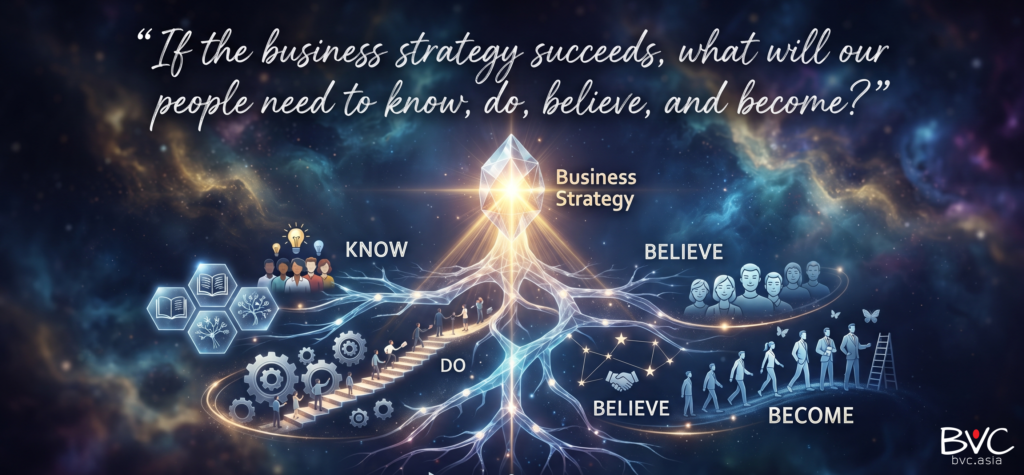
“If the business strategy succeeds, what will our people need to know, do, believe, and become?” This question produces a much clearer picture of the workforce the strategy is intended to create.
This question produces a much clearer picture of the workforce the strategy is intended to create.
Example: A business entering more competitive markets may require employees with stronger Business and Entrepreneurial Mindsets — people who identify opportunities, understand customers, experiment, make decisions under uncertainty, and turn ideas into value.
A business undergoing green transformation will require more than environmental awareness. It will require Green Skills, Green Behaviors, and a Green-oriented organizational culture.
A business driven increasingly by technology will require more than basic digital literacy. Employees must be able to apply Digital, Data, and AI capabilities to improve work, decision-making, operations, and customer experience.
An organization that expects innovation and faster execution must also reconsider the employee experience. People cannot be expected to behave entrepreneurially while every decision requires multiple layers of approval.
Employees need space to think, authority to act, permission to experiment, access to information, and recognition when they create value.
The future workforce may therefore be defined through characteristics such as Digital/Data/AI Capability, Green Workforce Readiness, Customer Centricity, Entrepreneurial Mindset, Future-Critical Talent, Empowerment, Learning Agility, and Cross-functional Collaboration.
7.Move Beyond Development — Build the Ability to Deploy and Use People
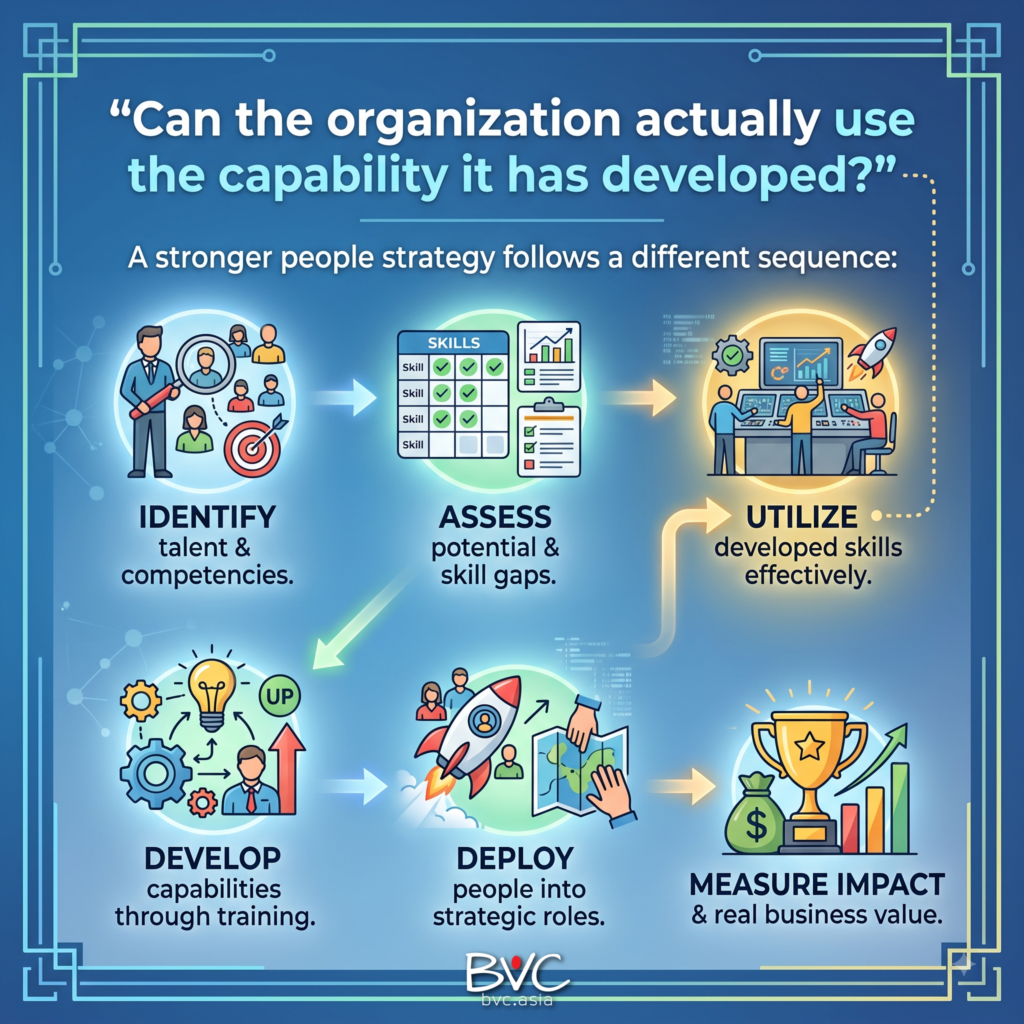
One of the biggest weaknesses in conventional HR strategy is the assumption that development itself is the outcome.
Employees are assessed. Gaps are identified. Training is delivered. The program is completed.
But the business question remains unanswered:
Talent management illustrates this clearly.
The size of the talent pool tells us very little about organizational capability. A much more meaningful question is whether ready talent has been deployed into critical roles, transformation projects, new businesses, strategic assignments, or leadership pipelines.
A stronger people strategy follows a different sequence
The same applies to future skills.
Completing a learning program is not the goal. Employees must be able to apply new capability in real work.
Entrepreneurial Mindset should not end with an assessment score. Employees should be given opportunities to identify opportunities, test ideas, build business cases, pilot solutions, commercialize new products or improve customer value.
Green capability should not end with Green Skills certification. It should influence projects, operational decisions, customer solutions, resource efficiency, innovation, and the transition toward sustainable business.
The strategic question therefore becomes:
“How effectively can the organization convert human potential into business capability?”
This is the point at which HR Strategy begins to become genuine business strategy.
8. Design KPIs That Show the Journey from HR Activity to Business Impact
Measurement is one of the strongest tests of strategic clarity.
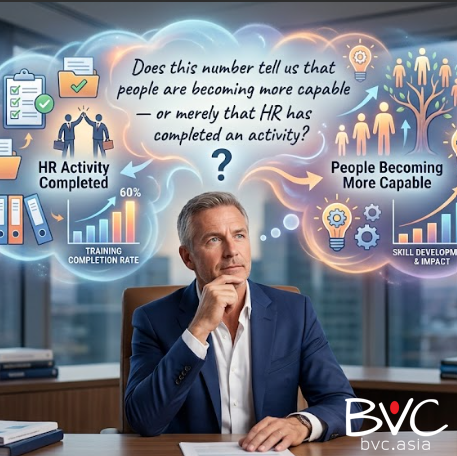
A useful question for every HR KPI is:
“Does this number tell us that people are becoming more capable — or merely that HR has completed an activity?”
Training completion measures activity.
Passing an assessment begins to measure capability.
Applying the skill in real work measures application.
Consistent use of new behaviors measures adoption.
Improved productivity, customer outcomes, innovation, revenue, risk, or operational performance begins to demonstrate business impact.
A useful measurement hierarchy is therefore:
Case Study: Consider digital capability.
Instead of measuring only the percentage of employees trained in AI, an organization might measure whether people have the required Digital/Data/AI proficiency for their roles, whether they apply those capabilities in work, and whether technology-enabled work actually improves productivity or customer experience.
For talent, measurement can move from Talent Identification to Talent Readiness, Talent Deployment, Talent Utilization, and ultimately Talent-led Business Outcomes.
Case Study: Green transformation
measurement can progress from Green Skills Readiness to Green Skills Application, Green Behavior Adoption, and finally contribution to Green Transformation outcomes.
This also clarifies accountability.
HR should not automatically own every business result.
Revenue, carbon reduction, market share, customer retention, or business profitability are usually shared outcomes involving business functions, strategy, finance, operations, sustainability, and HR.
HR’s accountability lies in demonstrating that the organization has the people readiness, capability, talent, behaviors, leadership, and workforce systems required to achieve those outcomes.
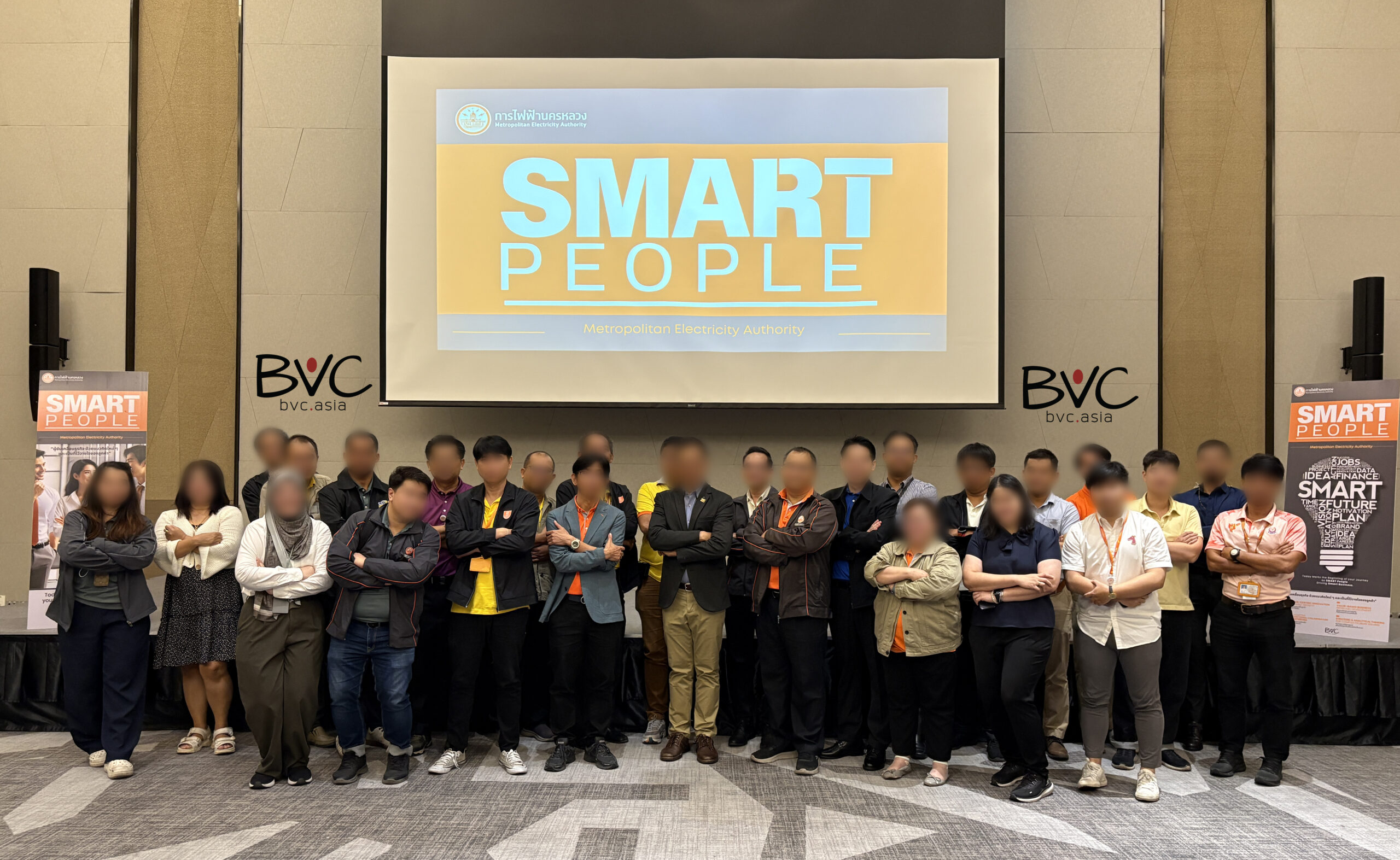
BVC.asia Trusted by MEA to Lead the “MEA SMART People” Project – Empowering Talent Towards Global Utility Standards
BVC.asia has been entrusted by the Metropolitan Electricity Authority (MEA) to drive the “MEA SMART People” initiative — a strategic project aimed at enhancing the capabilities of MEA People to meet the standards of leading global smart utilities.
This transformative program is a cornerstone in MEA’s long-term vision to build an organization that excels in innovation, service excellence, and workforce readiness. The “MEA SMART People” project focuses on holistic development, covering areas such as leadership, communication, digital adaptation, and progressive organizational culture.
“We are honored to be chosen by MEA for this pivotal initiative. BVC.asia is committed to being a thinking partner and helping MEA’s people embrace the future with competence and confidence.” — BVC.asia Executive Representative, Panit Thanya.
BVC.asia has collaborated closely with MEA leadership to design and deliver tailored learning experiences that align with the organization’s strategic goals and operational context.
More details:
To successfully elevate the capabilities of its workforce to a world-class standard, a structured, globally benchmarked approach is essential. The process begins with identifying and studying successful models from global metropolitan utilities, particularly in cities renowned for innovation and efficiency such as Singapore, Tokyo, and New York. These leading utilities offer valuable examples in areas such as Digital Utility Transformation, Workforce Upskilling and Reskilling, and the cultivation of a Customer-Centric Culture. By analyzing their strategies, it becomes clear that true transformation lies not just in technology adoption but in people readiness and cultural alignment. Once the exemplars are selected, the next step is to analyze their best practices and decode their success factors in detail. For example, global utilities have implemented robust Leadership Pipeline systems to ensure long-term continuity and strength in management. They have also embraced Agile Working Cultures, which allow for faster adaptation to market and technological shifts. In terms of technical capability, many employ a structured comparison of Strategic Competencies and Core Functional Knowledge to ensure their workforce is not only technically skilled but also strategically aligned with long-term organizational goals. These principles must then be carefully compared against the local organizational context to tailor an effective capability enhancement strategy suitable for the Thai utility sector.
Building on this analysis, organizations can then move forward by developing a capability-building framework aligned with global standards. A proven and effective model for workforce development is the 70:20:10 approach, which recommends that 70% of employee learning comes from hands-on job experiences, 20% from learning through others (e.g., coaching and mentoring), and 10% from formal training programs. This model ensures learning is continuous, embedded in daily work, and enriched by both structured instruction and collaborative environments. Complementing this is the design of a Learning Journey that aligns with a clearly defined Competency Map, tailored to different roles and growth stages. Central to this journey are future-oriented concepts such as Digital Literacy, Data Thinking, and a Sustainability Mindset, which are essential competencies for modern utility employees operating in an increasingly digital and environmentally conscious world.
To ensure that development initiatives are producing measurable results, it is crucial to establish Key Performance Indicators (KPIs) and Talent Indicators that are benchmarkable. Some globally recognized indicators include the Digital Maturity Index, which assesses how well individuals and teams apply digital tools and systems in their roles; the Leadership Readiness Score, which evaluates the strength and preparedness of leadership pipelines; and the Service Excellence Index, which monitors the effectiveness and customer-centricity of frontline operations. These indicators provide data-driven insights into where development efforts are succeeding and where further investment is needed.
Finally, sustainable transformation requires not only systems and training but also strong internal communication and the cultivation of a future-ready culture. Organizations must embed the concept of “SMART People” into everyday narratives, encouraging a shared vision that connects individual development to broader organizational goals. This includes consistent messaging from leadership, storytelling that celebrates progress and impact, and initiatives that reinforce new values and behaviors. A visible shift in culture—where learning, agility, and innovation are embraced at every level—becomes the foundation for long-term success. By integrating these five pillars—global benchmarking, strategic practice adaptation, competency-aligned frameworks, measurable outcomes, and cultural alignment—organizations can confidently uplift their people to operate at par with the best in the world.
BVC.asia ได้รับความไว้วางใจจาก MEA เดินหน้าขับเคลื่อนโครงการ “MEA SMART People” เสริมศักยภาพบุคลากร สู่มาตรฐานสากล
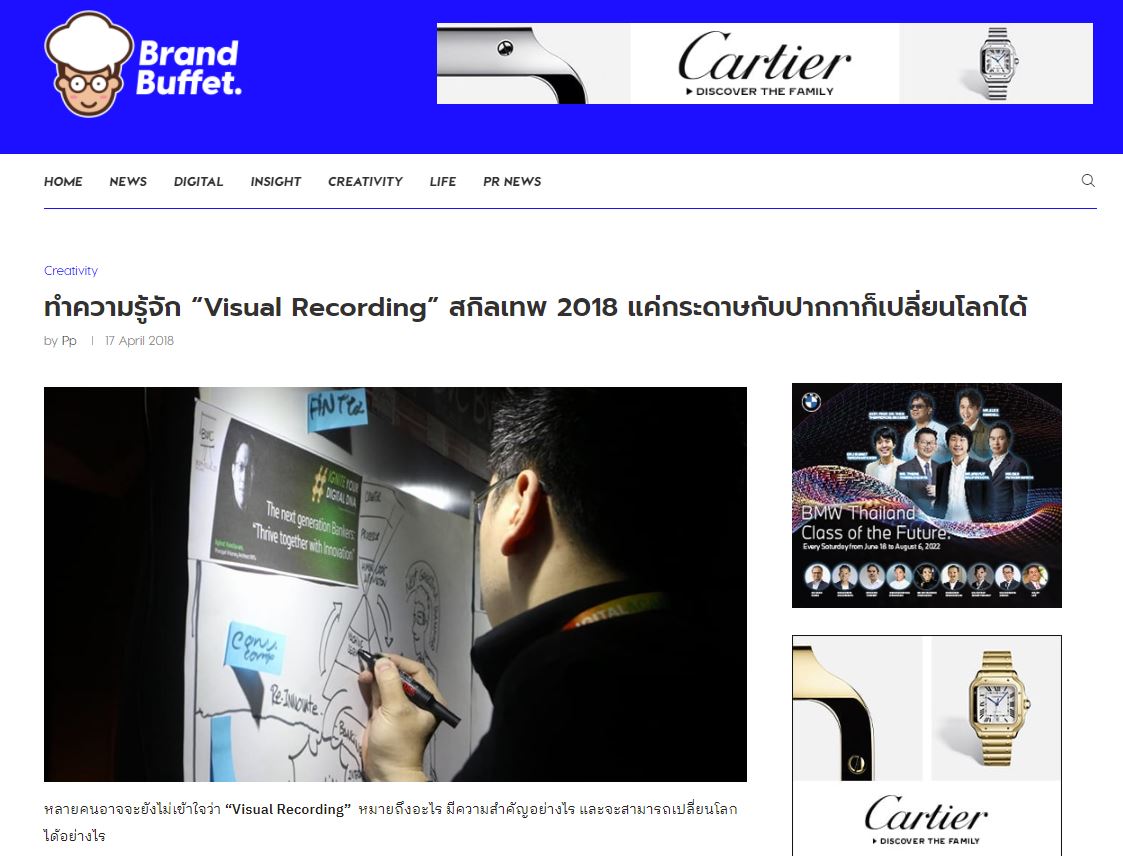
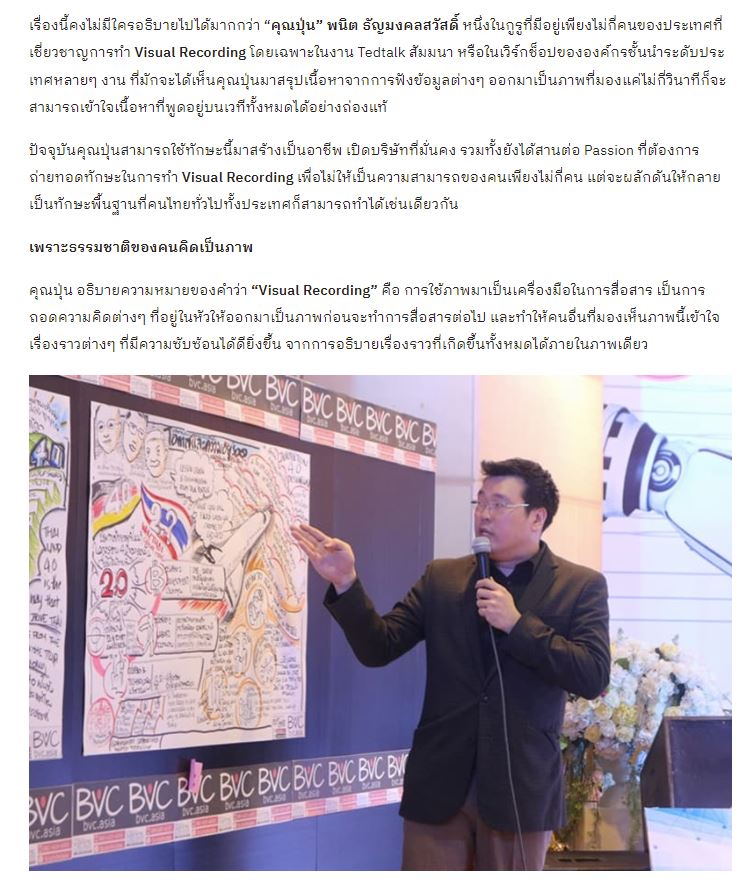
Panit was honored to give an interview to “Brand Buffet” after participating in important major events like Techsauce Global Summit 2017-2018, TEDx Bangkok, Startups Thailand and many other notable events in Thailand. (Visit Brand Buffet Archive page)
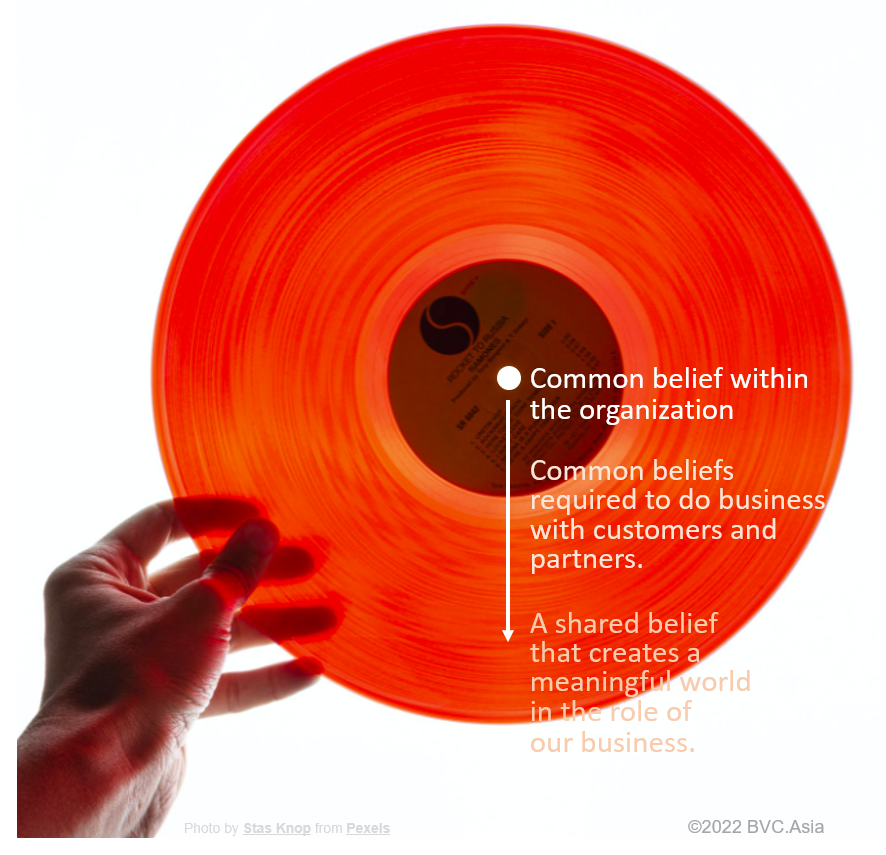
The COVID crisis has forced employees and executives to work from distinct locations, and employees start learning to work with a virtual team. Many corporate values focus on building beliefs in everyone in the company and tending to make decisions in the same direction to create consistency in work as well as to make it easier to manage change.
“Change happens faster than managing organizational change.”
Amornrat Suksayan
The key factor that makes corporate values is not just propaganda for leading organizational change or just a symbol of mass beliefs. But it is a crucial tool that leaders must apply by looking at the following “post-Covid” variables:
Hybrid Workplace: Today’s workers don’t come together in real places every day. They have another private world that may shape their beliefs. In the past, we may only see differences in ethnicity or place of residence or professional beliefs, but today, their “family” is clearly contributing to their personal beliefs.
Gender Diversity, Personal Taste and Self Confident: Preserving the individual right to believe something is an increasingly important concern for the new generation. Self-confidence is forged by a more expressive framework of self-confidence than any generation. Strategies for communicating values and making beliefs without coercion are especially important.
Rapid business expansion or reduction: Core values in Asia emphasize stability and trust in the organization. “Unity” is the heart of success in many organizations. The volatility of mergers and acquisitions or even business dissolution/expansion creates situations that are contrary to the values that leaders are trying to refer to.
Multiple Core Values: Employees in a temporary contract that hold the values of the parent organization.
Transformational trends require organizations to share common values that enable them to cope with business challenges in a way that people in their organizations feel empowered and believe they are always doing good for the organization.
However, having shared values seems difficult because the above factors clearly indicate that employees value individual values over shared values of the organization. The key is that leaders do not view corporate values as corporate values but view them as personal values of everyone.